

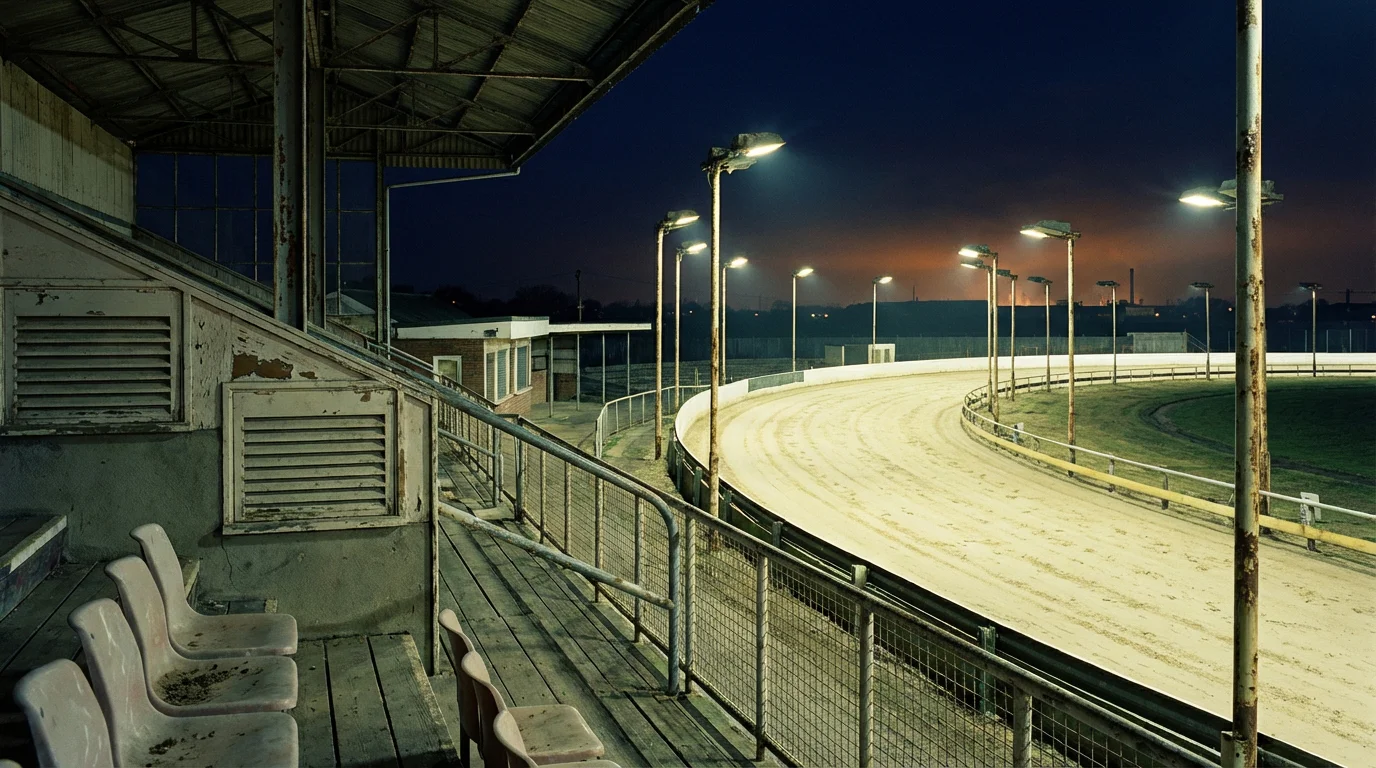
The Stadium That Defined the Modern Derby
For 31 years, the English Greyhound Derby lived at Wimbledon. From 1985, when the competition left its original White City home, until 2016, when the stadium closed its doors for the last time, Wimbledon was the Derby. The venue shaped the race, the race defined the venue, and together they produced some of the most memorable nights in greyhound racing history. Learn more about Derby history at greyhoundderbydraw.
Wimbledon was not just a location — it was a set of constraints and opportunities that influenced which dogs won, which traps mattered, and how the draw translated into race outcomes. The track’s geometry, its atmosphere, and its position in south London all contributed to a Derby experience that no longer exists but continues to shape how the competition is understood. Anyone who wants to put the modern Towcester-era Derby in context needs to understand what came before it.
The Wimbledon Era: 1985 to 2016
Wimbledon Stadium had been a greyhound racing venue since 1928, but it became the Derby’s home in 1985 after White City — the original Derby venue since 1927 — was sold for redevelopment. (Source: Star Sports Derby Roll of Honour) The move was controversial at the time. White City had been the home of greyhound racing since 1927 and carried nearly six decades of tradition. Wimbledon was a functioning venue with its own identity, but it was not White City, and the purists were sceptical.
Those doubts evaporated quickly. Wimbledon’s compact, atmospheric circuit proved an excellent fit for the Derby. The track was a compact oval with a 480-metre race distance for the Derby trip — tighter and shorter than the modern Towcester layout. The bends were sharper, the straights were shorter, and the run to the first bend was considerably less than the 90 metres Towcester offers. This geometry rewarded dogs with explosive early pace and the ability to handle tight turns at speed. Wide runners struggled more than they do at Towcester, and the inside traps carried a measurable advantage that shaped betting strategy throughout the era.
The Wimbledon years coincided with greyhound racing’s transition into the television and sponsorship age. A succession of title sponsors — the Daily Mirror, William Hill, Ladbrokes, and others — brought corporate investment and media attention that elevated the Derby’s profile beyond the traditional greyhound audience. Saturday-night Derby finals were broadcast on terrestrial television, drawing viewers who had never been to a track. The prize money grew from five figures to six, and the event became a fixture on the broader British sporting calendar.
Wimbledon also gave the Derby its modern competitive structure. The six-round elimination format, the seeded draw system, and the progressive sharpening of the field from nearly 200 entries to six finalists were all refined during the Wimbledon years. The template that Towcester inherited in 2017 was not invented from scratch — it was the product of three decades of evolution at a venue that demanded tactical precision from dogs, trainers, and bettors alike.
The atmosphere was part of the product. Wimbledon on Derby final night had an energy that those who experienced it still describe in superlatives. The crowd — several thousand in the stadium, with the surrounding streets packed with punters who could not get in — created a noise level that genuinely affected the racing. Dogs sensitive to crowd noise could be unsettled in the traps, and the Trap 1 position, closest to the main grandstand, was considered by some trainers to carry an additional disadvantage beyond its geometric properties. Whether this was real or apocryphal, the belief itself influenced the market.
Memorable Wimbledon Finals
The Wimbledon era produced Derby finals that still define the competition’s mythology. Rapid Ranger’s back-to-back victories in 2000 and 2001 established him as one of the greatest Derby dogs in history — a wide-running powerhouse who overcame the venue’s bias towards inside runners through sheer speed and strength. (Source: Ladbrokes — Famous Greyhound Derby Winners) His second Derby win, when he became only the third dog in history to retain the title, was achieved in a time that stood as the Derby final record at Wimbledon for years.
Westmead Hawk’s double in 2005 and 2006 matched that achievement and demonstrated a different kind of Derby excellence. Where Rapid Ranger overwhelmed his opponents with raw pace, Westmead Hawk was a tactical runner — adaptable, consistent, and able to win from different positions depending on the draw. His ability to handle Wimbledon’s tight turns from both inside and outside traps made him virtually draw-proof, a quality that very few Derby dogs have ever possessed.
The 2012 final, won by Blonde Snapper at 8/1, reminded everyone that the Derby can defy expectations. The short-priced runners that year were compromised by the draw, and Blonde Snapper, a wide seed from Trap 6, exploited clear space on the outside to win by a length. It was a victory that demonstrated the draw’s power to override form — a theme that recurs throughout Derby history and that bettors ignore at their cost.
Other Wimbledon-era finals are remembered for their drama rather than their result. Dead heats, photo finishes, first-bend pile-ups that reshaped the market’s assessment of which traps were viable — these were the moments that built the Derby’s reputation as unpredictable, visceral, and unlike any other race in the sport. The venue’s compact geometry amplified these moments. At Wimbledon, there was nowhere to hide. The margins were thin, the bends were tight, and the races were decided in seconds.
The Closure and Its Impact
Wimbledon Stadium closed in 2017. The site, owned by a property development company, was sold for redevelopment as part of the AFC Wimbledon football stadium project. The last Derby at Wimbledon was held in 2016, and the competition moved to Towcester for the 2017 renewal. (Source: SIS Racing — English Greyhound Derby)
The closure was not sudden — the threat had hung over the venue for years, and connections had been preparing for the eventual loss of the Derby’s London home. But the reality of losing Wimbledon hit the sport hard. It was not merely a change of venue. It was the end of an era in which the Derby was a London event, accessible to a metropolitan audience, embedded in the cultural life of the capital. Moving to Towcester — a racecourse in rural Northamptonshire — meant sacrificing proximity, atmosphere, and the walk-up crowd that Wimbledon generated on big nights.
The impact on the competition itself was significant. Towcester’s track was fundamentally different from Wimbledon’s — longer, wider, with sweeping bends rather than tight turns. Dogs that had excelled at Wimbledon were not guaranteed to excel at the new venue. The trap bias shifted: Wimbledon’s inside-trap advantage was replaced by a flatter bias profile at Towcester, where outside traps became more competitive. Trainers who had built their Derby strategies around Wimbledon’s specific demands had to adapt, and the ante-post market had to recalibrate its assumptions about which running styles would succeed.
For bettors, the Wimbledon closure created a data discontinuity. Historical trap statistics from the Wimbledon era could no longer be applied directly to the Towcester-era Derby. The 30-year dataset of Derby final outcomes at Wimbledon became historical context rather than predictive data. This is an important distinction that still matters: when trap bias tables cite 40 years of Derby final results, those results span three different venues with three different track geometries. Aggregating them without venue adjustment is misleading. The Towcester-specific sample — seven finals as of the end of 2025 — is the only dataset that reflects the current competitive reality.
Wimbledon’s Legacy in the Draw
The draw system the Derby uses today was developed and refined during the Wimbledon years. The three-tier seeding classification — railer, middle, wide — the inside-out allocation sequence, and the randomisation within categories all became standard practice at Wimbledon and were inherited by Towcester without fundamental change. The system works because it was designed for a six-dog, six-trap format on an oval track — and that format remains constant regardless of venue.
What changed between venues was the practical impact of each seeding category. At Wimbledon, railers held a pronounced advantage because the tight turns and short run to the first bend rewarded dogs that could secure the rail quickly. The seeded draw reinforced this by placing railers in the inside traps, giving them the shortest possible path to their preferred line. Wide seeds, by contrast, faced a structural challenge: the tight geometry meant that their wider running line cost them proportionally more ground per bend, and the shorter straights gave them less time to recover that distance.
At Towcester, the balance has shifted. The longer run to the first bend and the wider bends reduce the railer’s geometric advantage and increase the wide seed’s ability to compete. But the draw system itself — railers inside, wides outside — remains unchanged. This means that the draw’s effect on race outcomes is venue-dependent even though the draw mechanism is venue-independent. A bettor who understands this distinction can avoid the trap of applying Wimbledon-era assumptions to Towcester-era racing. Also read our English vs Irish greyhound Derby history.
Wimbledon also left a cultural legacy that still influences the market. Many current Derby bettors formed their understanding of the competition during the Wimbledon years. Their instincts about which traps are favourable, which running styles succeed, and how the draw shapes the final were calibrated at a venue that no longer hosts the event. Those instincts are not wrong — they were correct for Wimbledon — but they need recalibration for Towcester. The bettor who recognises that the market’s collective memory is partially outdated, still carrying Wimbledon biases into a Towcester world, has an analytical edge that is both subtle and persistent.
