Six Jackets, Six Stories
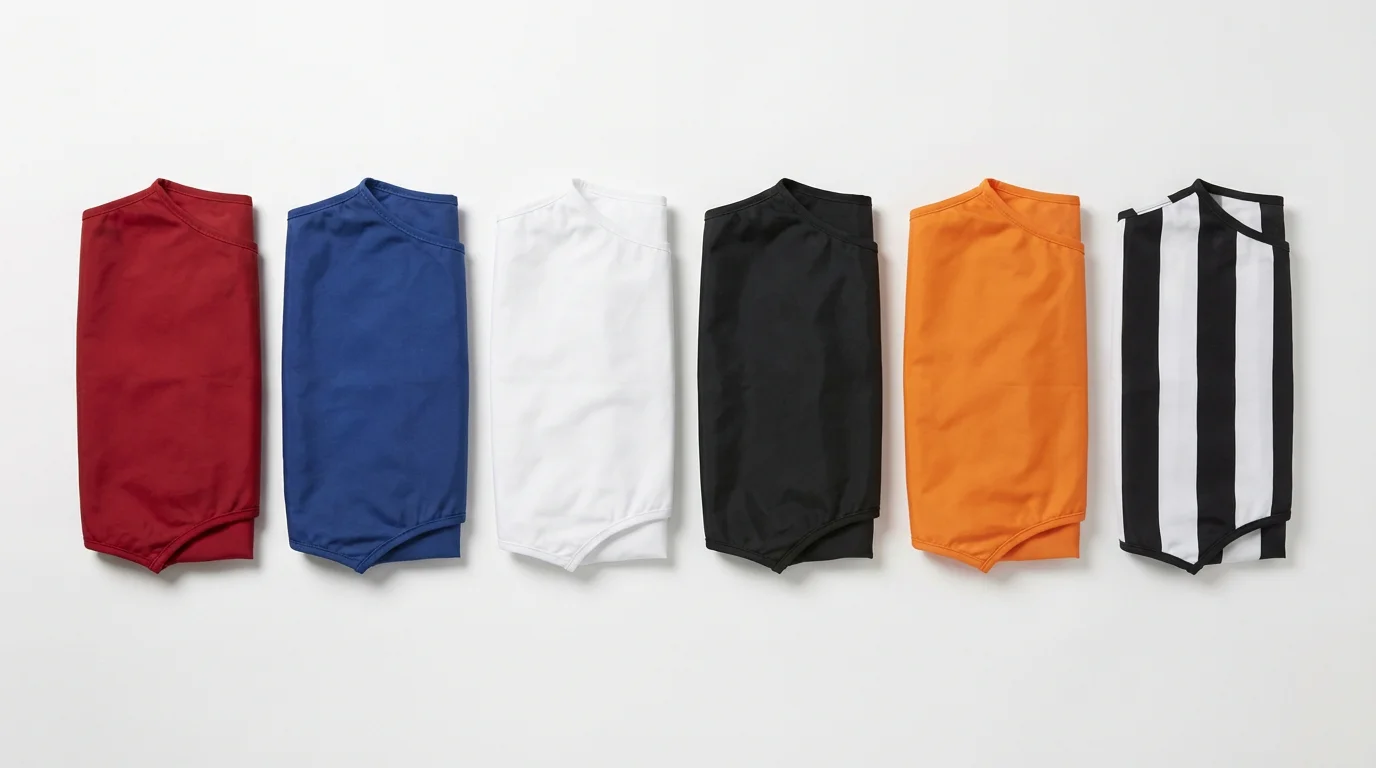
Walk into any greyhound stadium in Britain or Ireland and the first thing you notice is the colour. Six dogs in six jackets — red, blue, white, black, orange, black-and-white stripes — burst from the traps and tear around the track. The colours are not decorative. They are functional, identifying each dog by its starting position throughout the race, and they are universal across the sport. Trap 1 always wears red. Trap 6 always wears stripes. That consistency has been part of greyhound racing since the sport’s earliest decades, and it remains one of its most recognisable features. Find more trap analysis at greyhoundderbydraw.
For Derby bettors, the jacket system is more than a visual aid. It is a direct link between the draw and the race. When you know that your fancy has drawn Trap 4, you know it wears the black jacket, and you can track it through every stride of the race on screen or in person. When you hear a commentator call “red leads at the first bend,” you know instantly that the Trap 1 runner is in front. The colours translate the abstract draw allocation into the physical reality of the race, and understanding the system is part of the basic literacy of greyhound betting.
The Six Jacket Colours
The standard jacket system in British and Irish greyhound racing assigns one colour to each of the six starting traps. The order, from inside to outside, is fixed and has remained unchanged for decades.
Trap 1 wears red. The inside position, closest to the rail and the running hare. In the Derby’s seeded draw, Trap 1 is almost always occupied by the first railer drawn — a dog whose natural running style takes it to the inside of the track. The red jacket is the one most closely associated with front-runners and rail-huggers, and on Derby night, it is the jacket that the crowd watches first when the traps open. A fast-breaking railer in red sets the pace for the entire field.
Trap 2 wears blue. The second inside position, typically occupied by another railer or, if the heat contains only one, by the first middle seed. Blue is the quiet jacket — not the dramatic inside draw, not the wide outside position, but a pragmatic starting spot that gives the runner a short path to the rail if the red jacket does not break as fast. In Derby heats with multiple railers, the blue jacket often ends up in a first-bend duel with the red, and the outcome of that contest shapes the entire race.
Trap 3 wears white. The classic middle position, often assigned to the first middle seed drawn in the heat. White is the versatile jacket. Depending on the break, the dog in white can go inside — chasing the rail if the two inner runners leave space — or drift wide if the inside is congested. White is also the jacket most often affected by first-bend interference, because it sits at the point where inside runners cutting left and outside runners holding their line converge. Dogs that handle traffic well tend to perform better from the white jacket than those that need a clear run.
Trap 4 wears black. The outside middle position, a draw that carries statistical weight in Derby history. More Derby finals have been won from Trap 4 than from any other position across the competition’s near-century history, and the black jacket is associated with the sweet spot that gives a dog enough inside room to avoid wide trouble while providing enough outside space to avoid first-bend congestion. At Towcester, where the long run to the first bend allows middle-drawn dogs time to settle, the black jacket is a position of genuine tactical advantage.
Trap 5 wears orange. The first of the outside traps, typically assigned to a wide seed. Orange is the jacket that generates the most debate among Derby bettors. Historically, Trap 5 has the worst record in Derby finals — a drought stretching back decades without a Trap 5 winner. Whether this is a statistical anomaly or a structural disadvantage of the position is a genuine analytical question. The orange jacket sits in a no-man’s land: not far enough inside to benefit from the rail, not far enough outside to enjoy clear space. Dogs in orange must navigate traffic from both directions at the first bend, and the data suggests they do so less successfully than runners from other positions.
Trap 6 wears black-and-white stripes. The outermost starting position, assigned to the last wide seed drawn. The striped jacket carries connotations of isolation — the Trap 6 runner has no dog on its outside and can commit to its wide running line without interference from that side. At Towcester, the striped jacket has been associated with several high-profile Derby performances, including final victories by wide-running dogs that exploited clear space on the outside. The stripes are easy to track on screen, which adds to the drama when a Trap 6 runner makes its move around the final bend.
Why Colours Matter for Spectators
Greyhound racing is fast. A 500-metre race unfolds in under 30 seconds, and six dogs running at speeds exceeding 60 kilometres per hour are difficult to distinguish individually, especially on a floodlit evening track. The jacket colours solve this problem with elegant simplicity. Each dog is immediately identifiable by its colour, from the moment it enters the traps to the moment it crosses the line.
For trackside spectators, the colours are the primary means of following the race. Commentary assists, but in the noise of a Derby final — thousands of people shouting as the traps open — the visual is everything. You watch for the colour of your selection and track it through the bends. Red leading into the first bend. Black moving up on the back straight. Stripes finishing fast on the outside. The narrative of the race is told in colours before it is told in words.
For television and streaming viewers, the colours serve the same function at a distance. Camera angles on greyhound racing are typically wide, showing all six runners throughout the race. The jacket colours allow viewers to identify each runner instantly, even when the pack is tightly bunched or dogs are overlapping on the bends. Broadcasters reinforce the colour system in their on-screen graphics, and commentators reference jacket colours as fluently as they reference the dogs’ names.
The colour system also creates a shared visual language between bettors. When someone says “I’m on the red” or “the stripes looked strong,” every greyhound follower knows exactly what they mean. This shorthand is part of the sport’s culture, and it extends from casual conversation to expert analysis. Form guides reference trap colours. Betting tips name the jacket alongside the dog. The colours are not just identification — they are the sport’s visual vocabulary.
Trap Colour and Draw Allocation
The jacket a dog wears is determined entirely by its trap allocation in the draw. There is no choice, no preference, and no negotiation. A railer drawn into Trap 1 wears red. If it progresses to the next round and draws Trap 3, it wears white. The jacket changes with the draw; the dog does not get to keep its colour from one round to the next.
This creates a visual tracker of the draw’s effect on each dog through the rounds. A dog that wore red in the first round, blue in the second round, and white in the quarter-final has drawn progressively further from the rail — a shift that directly affects its racing dynamics. Conversely, a wide seed that wore stripes in round one and orange in round two has drawn slightly closer to the middle, potentially facing a different set of first-bend challenges.
For bettors studying race replays, the jacket colour is the fastest way to locate a specific dog and assess its running line, first-bend position, and finishing effort. When reviewing a dog’s form through the rounds, note which jacket it wore in each race and how its performance varied by position. A dog that ran well in red from Trap 1 but struggled in white from Trap 3 may have a draw dependency that the finishing times alone do not reveal. The jacket history, matched to the draw history, gives you a visual log of how each dog responds to different starting positions.
In the final, the jacket allocation takes on symbolic weight. The red jacket in a Derby final carries the history of every Trap 1 runner in every final that preceded it. The black jacket carries the statistical legacy of Trap 4’s dominance. These associations are not superstition — they are the accumulated record of how draw position interacts with race outcomes at the sport’s highest level. The jacket tells you the trap, the trap tells you the position, and the position tells you the probability. From there, the dog does the rest.
The Jacket System’s History
The six-jacket colour system was standardised in the early decades of British greyhound racing, though the exact origins are debated. The sport arrived in Britain in 1926, and within a few years of the first regulated meetings, the need for a consistent identification system was obvious. With six dogs running on a track at high speed, spectators and judges needed to tell them apart instantly. Coloured jackets were the simplest solution, and the red-blue-white-black-orange-stripes sequence became the standard that every licensed track adopted.
The choice of colours was pragmatic rather than symbolic. Red, blue, white, and black are visually distinct under artificial lighting — a necessary consideration for a sport that races predominantly in the evening. Orange provides a warm-toned contrast to the cooler red and blue. The black-and-white stripes for Trap 6 are the most distinctive of all, visible even at distance and from acute viewing angles. The system was designed for function, and its longevity — nearly a century in service with no changes — testifies to how well it works.
Ireland adopted the same colour system, which creates a seamless visual experience for dogs and bettors crossing between the English and Irish Derbys. A Trap 4 runner wears black at Shelbourne Park just as it does at Towcester, and a commentator calling the Irish final uses the same colour language as one calling the English equivalent. This cross-border consistency is one of the sport’s quiet strengths — a shared visual grammar that unites different competitions under a single system. Also explore our how trap position affects racing results.
The jackets themselves are lightweight, close-fitting garments designed not to impede the dog’s movement. They are secured before the dogs enter the traps and removed immediately after the race. The physical design has been refined over the decades — modern jackets use synthetic materials that dry quickly, fit snugly, and display their colours brightly under floodlights — but the fundamental purpose has not changed. Six dogs, six colours, one race. The system is as simple and effective today as it was when the first traps opened in the 1920s.
