
A Price Is a Photograph, Not a Film
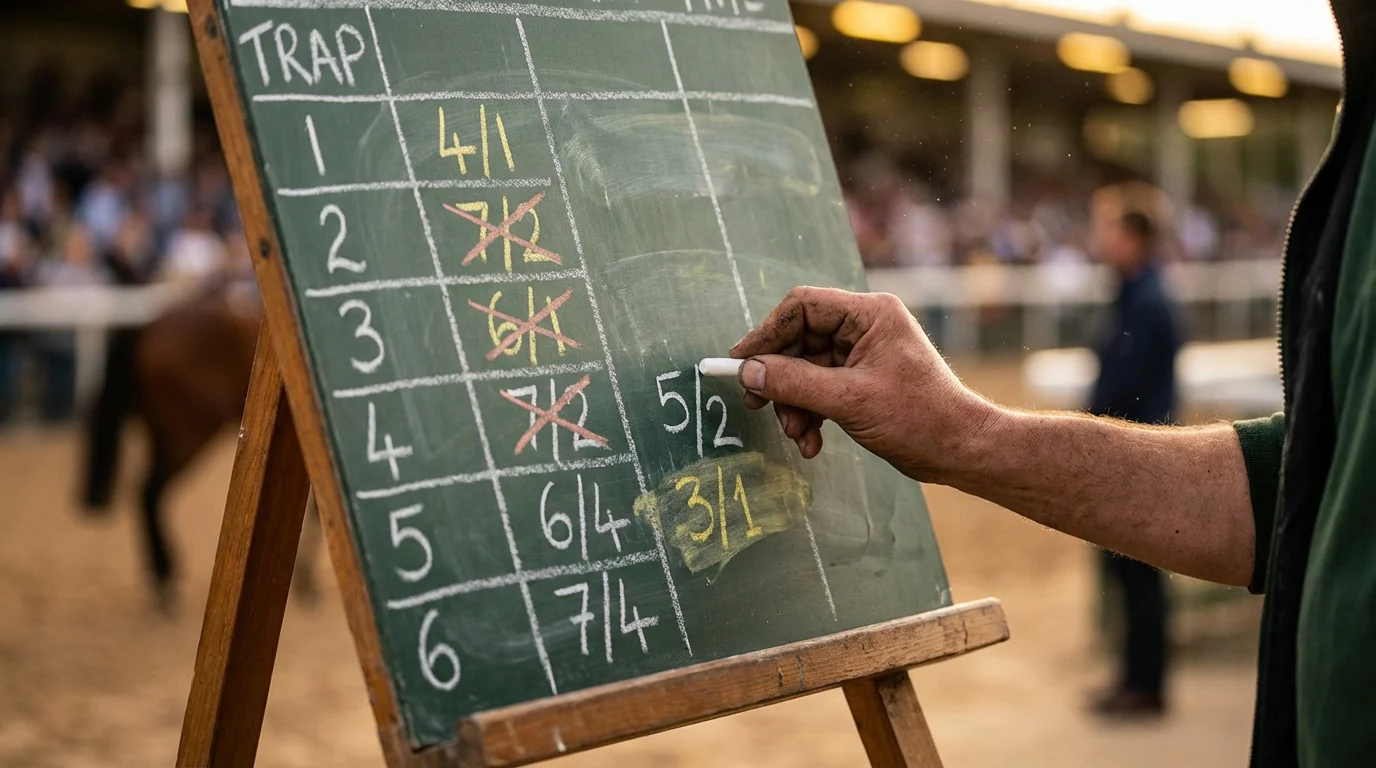
Every Derby price is a snapshot of the market at a single moment. The 12/1 you saw on Monday morning is not the 8/1 that appeared after Tuesday’s trial, and neither is the 5/1 that followed Wednesday’s draw announcement. Greyhound Derby odds move continuously across a five-week competition, driven by new information at every stage — entries, trials, draws, round-by-round results, and the shifting weight of public money. Understanding how and why those prices move is the difference between catching value and chasing it. Find more odds guides at greyhoundderbydraw.
Price movement in the Derby follows a predictable structure because the competition itself is structured. Each round produces new data, each draw reshapes the market, and each elimination narrows the field. The market absorbs this information in patterns that repeat year after year, and the bettor who recognises those patterns can position bets at the moments when the price is most likely to be wrong.
From Ante-Post to Round One
The longest and most volatile price movements occur in the ante-post phase — the weeks between the market opening and the first-round draw. During this period, prices are based on limited information: previous season form, trainer reputation, pedigree, and rumour. A dog that dominated open races last autumn might open at 8/1 for the Derby and shorten to 5/1 as the market coalesces around it. Another that was barely mentioned in November might appear at 40/1 and drift to 66/1 as no supporting information emerges.
The first major price event is the publication of the entry list. Dogs that were expected to enter but did not are removed from the market. Dogs that were not widely anticipated may appear at generous odds. The total number of entries affects the market’s assessment of competitive depth — a large, quality-heavy entry list tends to lengthen the favourite’s price because the probability of any single dog winning decreases as the field strengthens.
The second major event is the trial period. Fast trial times at Towcester generate immediate market reaction. A dog that clocks an impressive trial shortens, sometimes dramatically — a move from 16/1 to 8/1 on the strength of a single trial is not unusual. Conversely, a disappointing trial pushes a dog out. These movements are often excessive, because trial conditions — solo or paired gallops, no competitive pressure, variable going — do not reliably predict competitive performance. The bettor who recognises this disconnect can find value on dogs whose trial did not generate a headline but whose underlying ability remains intact.
The first-round draw is the third and most significant pre-competition event. Once the 32 heats are published, every dog has a defined context: a heat, a trap, a set of opponents. Dogs drawn into soft heats shorten. Dogs drawn into competitive heats or unfavourable traps drift. These movements happen within hours of the draw announcement, and the window for capturing the best post-draw prices is narrow — typically two to four hours before the market has fully digested the allocation.
Round-by-Round Price Evolution
Each round of Derby racing produces a wave of price adjustments as the market absorbs new performance data and responds to the next draw.
After round one, the biggest movers are dogs that either outperformed or underperformed expectations. A 25/1 outsider that wins its heat impressively might shorten to 10/1 for the outright. A 6/1 second favourite that scraped through in third might drift to 12/1. These movements are largest after the first round because the first round produces the most new information — it is the first time many dogs have raced competitively at Towcester, and the market is recalibrating from ante-post speculation to actual form.
Rounds two and three produce smaller but still significant movements. The field has halved, the quality range has compressed, and the dogs that were always going to struggle have been eliminated. Price shifts at this stage are driven more by draw allocation than by performance — a dog that won well in round two but draws a tough heat in round three may drift despite its improving form. The market at this stage is more efficient than in the ante-post phase, because the data is richer and the number of dogs in the market is smaller. Finding mispriced runners becomes harder, but the draw continues to create pockets of value when the market overreacts or underreacts to trap allocation.
The quarter-finals mark a transition point. With 24 dogs remaining and only four heats, each runner’s form trail is well documented. The market narrows its focus to a smaller group of genuine contenders, and the prices at the top of the market become more stable. Outsiders that have progressed through three rounds without attracting market attention may still offer value — their prices remain long because the market has not yet fully acknowledged their progression — but the window is closing.
The semi-final draw produces the last major repricing event before the final. Two heats of six determine the composition of the final, and the market reacts aggressively to the allocation. A fancied dog drawn into the weaker semi-final may shorten for the outright by two or three points. A dog drawn into the stronger semi against other market principals may drift by a similar margin. These movements are driven by structure rather than form — the dog has not changed, but its path to the final has — and they are the most analytically tractable price moves of the entire competition.
Draw-Driven Price Moves
The draw is the single largest driver of price movement in the Derby outside of actual race results. Every draw announcement triggers a repricing cycle, and the speed and direction of that repricing follow consistent patterns.
Inside trap allocations for railers produce minimal price movement because they are expected. The market already assumes that a railer will draw inside, so the confirmation of Trap 1 or Trap 2 does not add new information. Outside allocations for wide seeds follow the same logic — Trap 5 or Trap 6 for a wide runner is the default expectation, and prices hold steady.
The moves come from mismatches and heat composition. A railer drawn into Trap 3 or 4, because the heat contains multiple railers and there are not enough inside positions, will drift. A wide seed in a heat where it is the only outside runner — giving it Trap 6 with an empty neighbour profile — may shorten. The larger the mismatch between the expected draw and the actual draw, the larger the price move.
Heat composition drives a second layer of movement. Two market principals drawn into the same heat will both drift, because the probability that both qualify drops when they must compete directly. A fancied dog drawn into a heat with no other seriously fancied runner may shorten, because its qualification path has cleared. These composition effects are compounded at the semi-final stage, where the two-heat structure means that the entire final composition is shaped by a single draw.
The practical lesson is timing. If you plan to bet after the draw, act quickly — prices adjust within hours, and the early movers capture the best value. If you plan to bet before the draw, price the risk of an unfavourable allocation into your stake and accept that the draw may go against you. Both approaches are valid. What is not valid is betting after the draw has been published but at prices that have already moved — at that point, the value has been extracted, and you are paying market rate for information that is already fully digested.
Where Value Emerges
Value in the Derby market appears at specific moments in the competition cycle, and those moments are predictable even if the specific opportunities are not.
The first value window is the deep ante-post phase, where prices are longest and information is thinnest. Value here is high-risk and high-reward — you are backing dogs at 20/1 or longer in the knowledge that many will never make it to Towcester. The edge comes from specialist knowledge: breeding lines, trainer patterns, physical development of young dogs. This is a niche within a niche, and it suits bettors with deep greyhound expertise rather than generalists.
The second value window is the immediate post-draw period for each round. The market’s initial reaction to the draw is fast but not always accurate. Within the first two to four hours of a draw announcement, prices reflect the draw allocation but have not yet been refined by detailed heat analysis. A dog that draws well may not have shortened enough. A dog that draws badly may have drifted too far. This window is available to any bettor who can analyse the draw quickly and act before the market catches up.
The third value window is after a round of racing, before the next draw. At this point, the market has absorbed the round’s results and repriced accordingly. Dogs that ran well have shortened; dogs that scraped through have drifted. But the next draw has not yet been made, which means the market is pricing each dog as if the draw is neutral. In reality, some dogs are more likely to benefit from the next draw than others — a railer that has been drawing well throughout is likely to draw well again, because the seeding system consistently places railers inside. This structural predictability is not fully priced by the market between rounds, creating a window for bettors who understand how the draw system works. Also read our greyhound Derby odds explained.
The final value window is the semi-final and final draw reaction. These draws produce the largest single-event price moves of the competition, and the market’s reaction — while directionally correct — is not always proportionally correct. A dog that shortens from 5/1 to 3/1 after a favourable semi-final draw may have moved too far if the semi-final still contains two other serious contenders. A dog that drifts from 8/1 to 14/1 after a tough draw may now offer value if its underlying class is sufficient to overcome the positional disadvantage. These late-stage mispricings are the most exploitable opportunities in the Derby because the database is richest and the market’s emotional response is most visible.
