

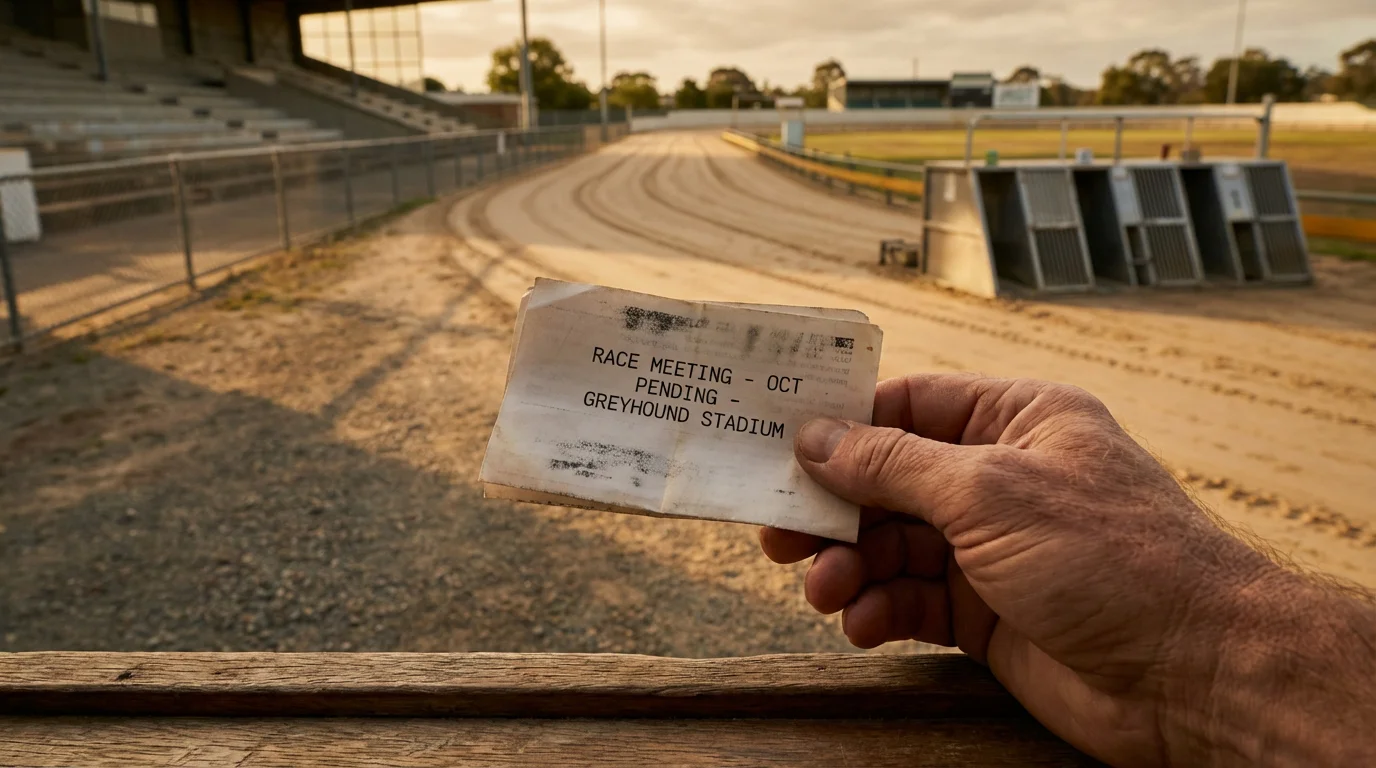
Betting Before the Traps Are Even Built
Ante-post betting on the English Greyhound Derby opens months before the first round, sometimes before the entry list has been finalised. It is, by definition, betting without complete information — no draw, no trial times at the venue, no indication of which dogs will actually make it to Towcester. That uncertainty is exactly what makes it attractive. Find more strategy guides at greyhoundderbydraw.
The prices available in the ante-post market are almost always longer than those offered on race day. A dog that opens at 20/1 in March might be 6/1 by the time it reaches the semi-finals — and the bettor who took the early price has locked in value that no longer exists. But that value comes with risk. Non-runners are not refunded. Injuries happen. Dogs withdraw. The ante-post market rewards early conviction, but it punishes blind optimism just as thoroughly.
Understanding how ante-post betting works in the Derby context — when markets open, how prices move, and what the specific rules mean for your stake — is essential if you want to engage with the longest and most volatile betting window in greyhound racing.
How Ante-Post Betting Works
An ante-post bet is a wager placed on an event before the final declarations or the draw have been made. In horse racing, ante-post markets typically open weeks or months before a race. In the Greyhound Derby, the principle is identical: bookmakers price up the likely contenders well in advance, and bettors can take those prices with the understanding that they are betting under ante-post rules.
The critical difference between ante-post and race-day betting is the non-runner rule. If you back a dog at ante-post prices and it does not run — whether through injury, withdrawal, failure to qualify, or any other reason — your stake is lost. There is no refund. This is the single most important distinction, and it shapes every aspect of how ante-post markets should be approached. The longer the price, the more likely it is to offer genuine value, but also the more likely that the dog in question never makes it to the race you are betting on.
Derby ante-post markets are typically priced as outright winner markets. You are betting on which dog will win the final, not an individual heat or round. Some bookmakers also offer each-way terms at ante-post stage, usually paying for two or three places, which provides a partial safety net — if your dog reaches the final but finishes second or third, the place part of your bet still pays. But even with each-way terms, the win part of the stake is lost if the dog does not complete the competition.
Prices in the ante-post market are set by the bookmaker’s traders, who assess each dog based on form, trainer reputation, trial data, and historical patterns. In the early ante-post stages — say, four to six weeks before the first round — the market is thin. Liquidity is low, and prices can be volatile. A single piece of information, such as an impressive trial at Towcester, can move a dog’s price by several points overnight. As the competition approaches and more information enters the market, prices stabilise and the ante-post market begins to resemble the structure of a race-day market, though still without the draw factored in.
The draw itself is a pivotal moment for ante-post bettors. Once the first-round draw is announced, dogs that were previously trading at identical prices may diverge sharply. A favourite drawn into a tough heat with two other fancied runners will drift in the market. A well-regarded outsider drawn into a soft heat might shorten. If you have already placed your ante-post bet, you live with whatever the draw produces. If you have not, the post-draw market is your last opportunity to bet at prices that still reflect some uncertainty about the competition’s outcome.
Timing Strategies for Ante-Post Bets
Early prices reward conviction. But conviction without information is just gambling. The art of ante-post timing is about identifying the moment when you have enough information to form a strong opinion, but the market has not yet fully absorbed that information into the price.
There are broadly three windows in the Derby ante-post cycle. The first is the deep ante-post phase — typically three to six months before the first round. At this stage, the market is based almost entirely on the previous season’s form, pedigree, and trainer reputation. Prices are at their longest because uncertainty is at its highest. The upside is enormous if you identify the eventual winner at this stage. The downside is that withdrawal rates are significant — many dogs priced up in March never make it to Towcester in May.
The second window is the pre-entry phase — roughly four to eight weeks before the first round, around the time entries are announced. This is where the market begins to crystallise. You can see who is actually committed to running, which trainers have multiple entries, and how the balance of UK and Irish runners is shaping up. Trial data from Towcester may also be available at this point, giving you venue-specific form to work with. Prices shorten from their deep ante-post levels, but they are still materially longer than what will be available once the draw is made.
The third window is the post-draw market. Once the first-round draw is published, every dog has a defined context — a heat, a trap, a set of opponents. This is the highest-information ante-post window, and prices reflect it. The value available here is more granular: you are looking for dogs whose draw is better than the market has acknowledged, or dogs whose opponents in the early rounds are weaker than their price implies. The prices are shorter, but the information base is far more solid.
For most bettors, the second window offers the best balance of price and information. You have enough data to form a defensible opinion, the prices still carry ante-post value, and the dogs you are considering have demonstrably committed to running. Betting in the first window is for specialists with deep knowledge of breeding lines, trainer patterns, and the physical development of young greyhounds. Betting in the third window is for analysts who can read a draw and identify structural advantages faster than the market.
Risks and Rules You Need to Know
The most obvious risk in ante-post betting is the non-runner. A dog you backed at 16/1 in March might pull a muscle in April and never see a Towcester trap. Your stake is gone. No appeal, no refund, no consolation. This is why ante-post stakes should always be sized with the assumption that a proportion of them will return nothing — not because the dog lost, but because it never ran.
Withdrawal rates in the Greyhound Derby are significant. Of the roughly 180 to 200 entries each year, many will not make it to the first round due to injury, loss of form, or tactical decisions by connections. Even among the dogs that are entered and drawn, first-round elimination removes two-thirds of the field. An ante-post bet on the outright winner must navigate all of these attrition points.
Rule variations between bookmakers can also catch the unwary. Some bookmakers apply best-odds-guaranteed terms to greyhound ante-post bets; others do not. Some offer each-way terms on the outright market; others restrict it to win-only. Dead-heat rules apply if the final produces a dead heat — your returns are halved. And some bookmakers reserve the right to void ante-post bets if the competition is materially altered, though this is rare in practice.
The less obvious risk is opportunity cost. Money tied up in an ante-post bet at 20/1 cannot be deployed elsewhere during the five weeks of competition. If new information emerges that makes your selection look weaker, you cannot adjust — you are committed. This is why experienced ante-post bettors treat their early stakes as distinct from their round-by-round betting bankroll, sized specifically for the risk profile of ante-post positions and not drawn from the same pool they use for race-day wagers.
Finally, there is the emotional risk of watching your ante-post selection progress through the competition without being able to trade out. Unlike exchange markets in horse racing, greyhound ante-post markets have virtually no secondary liquidity. You cannot lay off your position before the final. The bet stays open until the race is run or the dog is eliminated — and managing the psychological pressure of an accumulating potential return over five weeks is an underappreciated challenge.
When Patience Pays
Ante-post betting on the Greyhound Derby is not for everyone. It requires patience, risk tolerance, and a willingness to lose stakes on dogs that never run. It rewards early identification of quality — the ability to look at a young greyhound’s form in February and see a Derby finalist in June. It punishes impulsiveness, insufficient research, and the mistaken belief that a long price is the same thing as good value.
But when it works, it delivers returns that no other greyhound betting market can match. A 20/1 winner identified in the ante-post phase produces a return that is three or four times larger than the same dog would have paid on race day. The 2024 Derby was won by De Lahdedah at an SP that had shortened considerably from his early ante-post price. The bettors who backed him at 20/1 in the weeks before the competition did not simply pick a winner — they locked in a price that reflected a version of the market that no longer existed by final night. Also read our greyhound Derby ante-post betting explained.
The discipline required is straightforward: bet what you can afford to lose entirely, size your stakes conservatively, target the second ante-post window for the best risk-reward balance, and treat the non-runner risk as a cost of doing business rather than an unfair outcome. Ante-post betting on the Derby is a long game. The punters who play it well are not looking for excitement — they are looking for edge. And the Derby’s ante-post market, with its structural inefficiencies and thin liquidity, is one of the few places in greyhound betting where that edge consistently exists.
