

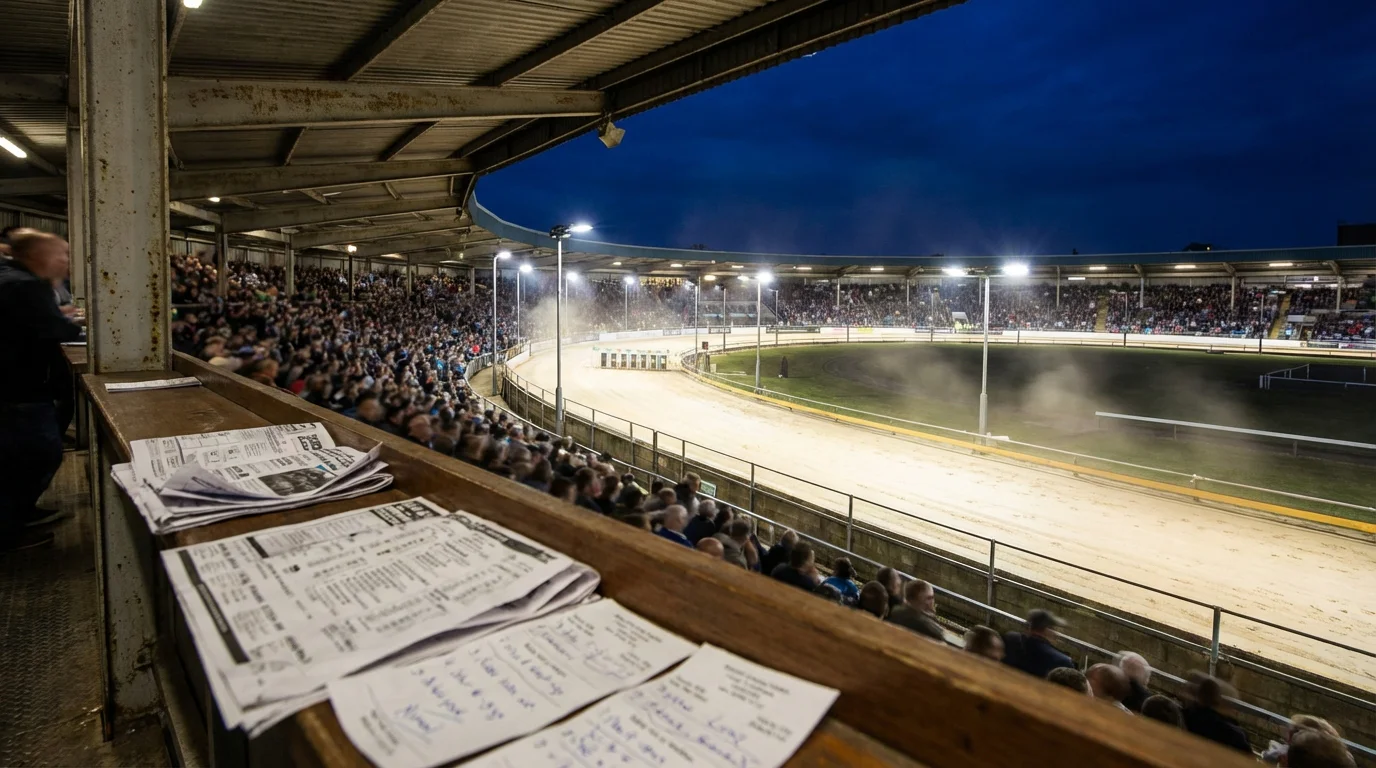
The Undercard That Matters
Derby final night is not a one-race event. The headline act — the six-dog Derby final — is the climax of five weeks of competition, but it shares the card with a programme of supporting races that carry their own prestige, their own betting markets, and their own analytical challenges. The most prominent of these is the Derby Plate, a consolation event for semi-final losers that often produces racing as competitive as the final itself. Beyond the Plate, puppy competitions, stayers’ events, and other open races fill out a final-night card that offers more betting opportunities per evening than any other night in the greyhound racing calendar. Find more Derby guides at greyhoundderbydraw.
For bettors, the supporting races are not filler. They are contests with form you have already studied — dogs you have watched through the Derby rounds, whose running styles, trap preferences, and fitness trajectories are well documented. The analytical work you did for the main competition carries directly into the undercard, and the markets on these races are typically less efficient than the Derby final itself, because public and media attention is focused elsewhere.
The Derby Plate
The Derby Plate is contested by the six dogs that finished fourth, fifth, or sixth in the two semi-finals — the runners that were eliminated at the penultimate stage. These are not moderate greyhounds. They are dogs that survived five rounds of elimination and were beaten in the semi-finals by margins that are often measured in lengths rather than classes. On a different night, with a different draw, several of them might have reached the final instead.
The Plate is run over the same 500-metre Derby distance at Towcester, typically as one of the earlier races on final night. It carries its own prize money — smaller than the Derby itself but significant — and its own draw, which follows the same seeding rules as the main competition. The six Plate runners are drawn into traps based on their railer, middle, or wide classifications, and the draw dynamics that shape the Derby final apply with equal force to the Plate.
Analytically, the Plate is one of the most readable races on the card. You have five rounds of form on every runner, including their semi-final performance — the race in which they were eliminated. You know their Towcester sectional profiles, their draw histories, and their running styles under pressure. The question is not whether these dogs have ability — they clearly do — but how the semi-final effort has affected them. A dog that was beaten a length in the semi-final after leading to the last bend may be physically and mentally drained. A dog that was never competitive in the semi, finishing well behind without being extended, may actually be fresher.
The Plate market is typically less scrutinised than the final, which means pricing errors are more likely. Public attention on final night is overwhelmingly focused on the Derby itself, and the Plate is treated as a supporting act. For the bettor who has studied the semi-final form in detail, this creates an opportunity: a race with well-documented runners, readable draw dynamics, and a market that is not giving it the attention it deserves.
Puppy and Stayers’ Contests
Final night at Towcester typically includes races beyond the Derby and the Plate, and these supporting events vary in format depending on the year’s programme. Puppy competitions — featuring younger greyhounds that are not yet eligible for or competitive in the main Derby — showcase the next generation of talent and offer an early look at dogs that may contest the Derby in future years.
Puppy races on Derby night carry smaller prize money but attract attention from breeders, trainers, and forward-looking bettors. A puppy that wins impressively on final night may appear in the following year’s ante-post market at shorter odds than its raw form would otherwise warrant, because the exposure of a Derby-night victory raises its profile. For bettors, the value in puppy races lies in identifying precocious talent early — a fast-finishing juvenile on final night might be worth noting for the next year’s Derby entries.
Stayers’ races, run over longer distances than the standard 500 metres, test a different set of attributes — stamina, pacing, and the ability to maintain speed through additional bends. These races attract a different type of greyhound and a different type of bettor. Stayers’ form does not translate directly to Derby form, but the races add variety to the final-night card and create additional betting markets for those who want to extend their engagement beyond the sprint distances.
Other supporting races may include invitational events, graded races featuring local Towcester dogs, or special competitions organised by the sponsor. The composition of the supporting card changes year to year, and the full programme is typically announced in the weeks before final night. Checking the card in advance allows you to plan your betting across the full evening rather than arriving with a single bet on the Derby final and improvising the rest.
Final Night Schedule
Derby final night at Towcester follows a structured schedule that builds towards the main event across an evening of racing. The programme typically runs from early evening through to approximately 10 pm, with the Derby final positioned as the penultimate or final race on the card.
The early races on the card are the supporting events — puppy races, stayers’ contests, and any invitational or graded races. These races set the tempo for the evening and provide the first indications of going conditions. If the early races produce times that are faster or slower than expected, that information feeds directly into your assessment of the later races, including the Plate and the final itself. A surface that is riding fast in the opening races will likely remain fast for the headline events, and your time-based expectations should adjust accordingly.
The Plate is typically positioned in the middle portion of the card, giving the Plate runners and their connections a defined slot that does not clash with the pre-final build-up. The gap between the Plate and the final is usually at least two or three races, allowing the atmosphere to build and the final-night crowd to reach peak intensity before the main event.
The Derby final itself is the climax. The six finalists are paraded, the draw is discussed by commentators, the crowd settles, and the traps are loaded. The race takes approximately 29 seconds. The evening’s emotional arc — built across two hours of supporting races, rising through the Plate, and peaking with the final — collapses into half a minute of action. Then the result is confirmed, the winner is celebrated, and the Derby is over for another year.
For bettors, the schedule creates a pacing opportunity. If you have allocated budget for both the supporting races and the final, the early races give you a chance to assess going conditions and form in real time before committing your final-night stakes. A planned approach — watching the first few races to calibrate your expectations, betting selectively on the Plate, and then placing your final bets with the most current information — is more disciplined than arriving with fixed opinions and betting rigidly regardless of what the early card reveals.
Betting on Supporting Races
The supporting races on Derby final night offer a distinct value proposition. The dogs in the Plate have documented form that you have studied through five rounds. The dogs in the other supporting races have form that can be assessed through standard racecard analysis. And the markets on all of these races are less efficient than the Derby final market, because the public’s attention and the bookmakers’ trading resources are disproportionately focused on the main event.
The Plate is the standout opportunity. Six dogs, all of proven quality, with extensive Towcester form. The market on the Plate is priced by the same traders who price the final, but it receives a fraction of the analytical attention. Price comparisons across bookmakers may reveal wider discrepancies on the Plate than on the final, because fewer bettors are checking. Draw analysis carries the same weight as in the final — six dogs, six traps, the same first-bend dynamics — but the market’s draw-adjustment may be less precise.
Forecast and tricast bets on the Plate can offer exceptional value. The six runners are closely matched — they were all semi-finalists, separated by small margins — and the finishing order is harder to predict than in the Derby final, where a clearer hierarchy usually exists. This uncertainty produces larger forecast and tricast dividends relative to the win odds, and a combination tricast covering three dogs in any order can be a profitable play when the field is evenly matched and the draw creates identifiable first-bend scenarios. Also read our greyhound Derby rounds breakdown.
For the other supporting races, standard form analysis applies. If you have time to study the racecard, check the draw, and identify a selection, bet. If you have not done the work, do not bet. The worst outcome on final night is not losing money on a well-analysed bet — it is losing money on a race you knew nothing about, because the atmosphere pushed you into a wager you would not have placed on any other evening. The supporting races deserve the same analytical discipline as the main event. Give them that discipline, and they reward it.
